
Chia seeds for babies have gained increasing popularity in baby nutrition over the years because of their power house of nutrition. This is because they include a range of nutrients such as fibre and omega 3 fatty acids. In this blog I discuss if chia seeds are safe for babies? When can babies eat them? And how to prepare them safely for 6 months onwards.
When can babies have chia seeds?
The NHS guidelines are usually from 6 months or when they are developmentally ready to start weaning. They are also suitable to use in both baby-led weaning and purees.
Chia seeds are not considered an allergen, however there is some limited evidence that those with a sesame seed allergy have had an allergic reaction from chia. So if they are at high risk of a sesame allergy it is best to speak to your gp or health professional before introducing them. Start with small amounts and observe for any reactions.
Are white or black chia seeds better for babies?
They are both fine to give to babies from 6 months. They differ slightly in nutrition such as white chia seeds contain slightly more calcium and omega 3 fatty acids. Whereas black ones have a bit more protein.

Nutritional benefits of chia seeds for babies
- High in omega-3 fatty acids which is really important for brain development.
- Rich in a range of nutrients such as fibre, iron, calcium, protein, selenium and zinc
- May support digestion due to their soluble fibre. However they shouldn’t be consumed in large amounts. Always introduce small amounts at first so this doesn’t upset your baby’s digestive system. They are also good to help relieve constipation. Again just not in large amounts or it will displace other nutrients.
Are chia seeds a choking hazard for babies?
Chia seeds will swell when in contact with water or moisture i.e absorbing the liquid. They will clump together in the mouth (from saliva) and become a choking hazard. Therefore it is not recommended to serve them dry to babies or young children.
To reduce the risk of choking, always soak them for around 30 minutes before serving in an appropriate way. They will form a gel-like texture when the water or moisture has been absorbed. Always supervise your baby during feeding
To ensure the right texture and serving them safely to your baby. Here is some information on how to do this correctly and remember to always soak chia seeds.
How to prepare chia seeds for baby
6 months
- Start with about ½ teaspoon soaked at 6 months
- Always soak before serving (for around 30 minutes) in either water, milk, yoghurt or puree, so it is a soft thin consistency.
- Mix into appropriate recipes such as smooth porridge, purees, mashed banana, or breastmilk yoghurt.
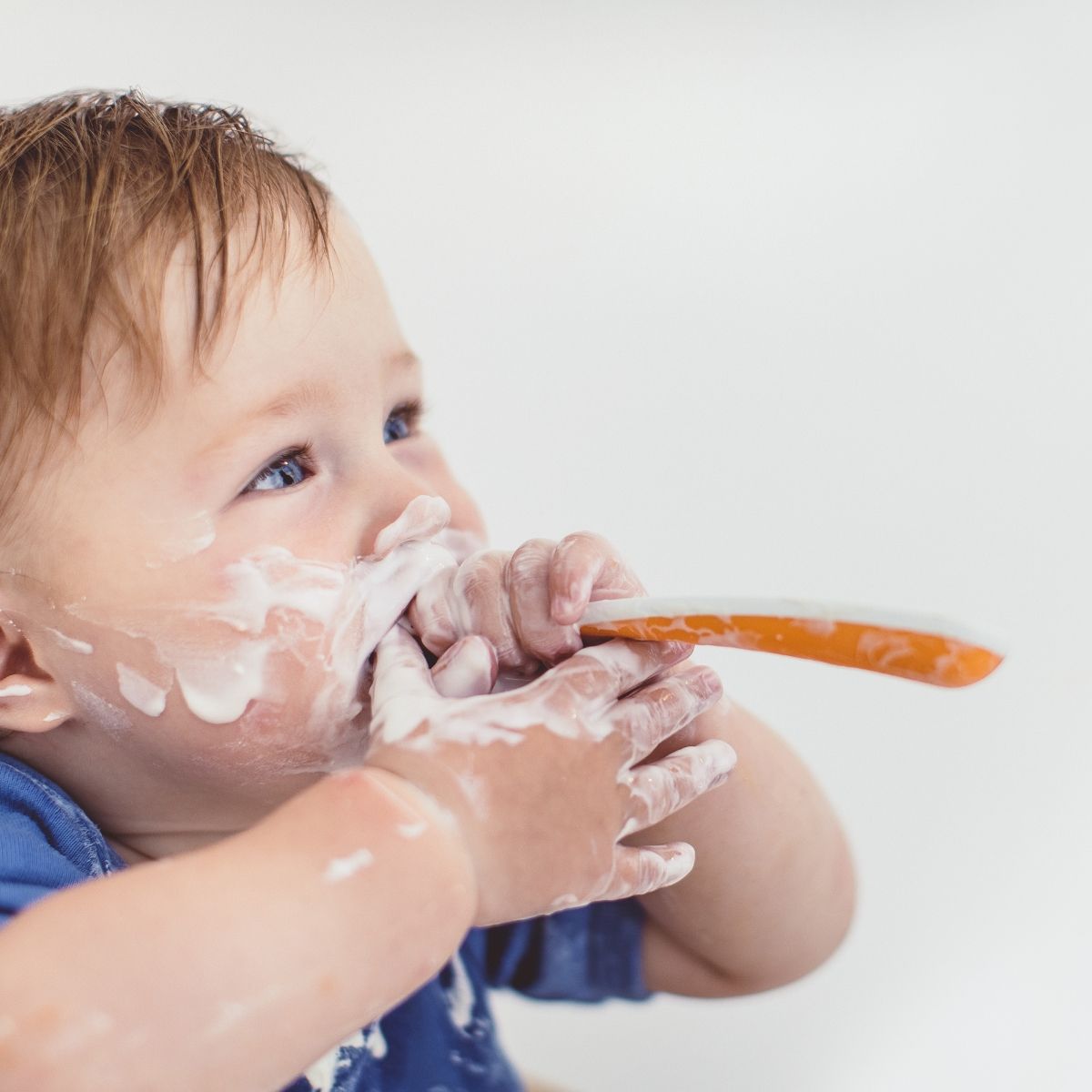
- Serve as a soft puree or soft mash by pre loading a spoon for them or letting them self serve. Alternatively let them use their hands to explore the texture.
12 months
- Gradually introduce more texture and quantity. You can increase it to 1 – 2 teaspoons (5 – 10 grams) a day, soaked in either water, yoghurt or wet mixtures as long as they tolerate it well and doesn’t upset their tummies.
- Don’t serve them dry but use in more of a variety of recipes and family meals such as porridge, pancake batters, overnight oats, smoothies, fruit chia jam, muffins, energy balls, breakfast cereals.
Chia seeds for toddlers and older kids are great for increasing extra nutrition, particularly fussy eaters. Using them in a variety of recipes will certainly help without noticing much change in flavour.
Chia seed recipes

Fruit smoothies (use no honey for under 12 months)
Chia seed egg (egg alternative for egg free baking)
Raspberry chia overnight oats (use no honey for under 12 months)
Final thoughts
Chia seeds are a brilliant source of nutrition for babies and toddlers. Knowing how to prepare them safely by soaking them first,and how to incorporate them into many recipes will give you confidence in feeding your child well.
If you are worried about your child not eating a variety of foods and would like to increase them as well as their nutrition. I offer a free call to see how I can help.
García Jiménez S, Pastor Vargas C, de las Heras M, Sanz Maroto A, Vivanco F, Sastre J. (2015). Allergen characterization of chia seeds (Salvia hispanica), a new allergenic food. J Investig Allergol Clin Immunol, 25(1):55-6. Retrieved November 3, 2021.


0 Comments