

You have probably heard the popular phrase “food before one is just for fun.” I still see it being shared on parenting forums and parenting groups. It is an important topic for parents starting solids to understand because it is often misunderstood.
This blog explores where the phrase comes from and why it is confusing. I explain the importance of nutrition as well as other reasons, so you can understand why food before one is NOT just fun!
Where did this phrase come from?
I am not sure of the origins of the saying but it has become and still is widely shared amongst parents and even some professionals. The intention of the phrase is to reduce pressure on parents when starting out on feeding their baby. It can give a reassuring feeling they don’t have to worry too much about how much or what they are eating.
However, saying it is JUST for fun is not the case.
Why this phrase is confusing
This phrase is confusing because it doesn’t encompass everything that feeding your baby after 6 months should be about.
According to the NHS guidance – Breastmilk/formula is still the main source of energy and nutrition when starting solids at 6 months.
However as they get older their energy demands increase and more solids are required to meet their needs.
The first meals babies have at around 6 months should be small tastes, stress free and exploratory. There is no pressure for full meals right away. Understandably this can seem confusing.

Food before one is just for fun myth
Food before one is just for fun is definitely a myth because milk alone is NOT going to meet essential nutrient needs for babies – such as iron and other nutrients. Most babies rapidly progress through eating 1 meal a day at 6 months to 3 meals a day by 9/10 months, so solid foods are therefore critical at this time.
There are also other reasons why food before one is just for fun is a myth including:
- It is an important learning journey for babies. Solid foods give the opportunity to learn about textures, tastes, and self-feeding.
- Delaying solids can contribute to fussy eating if you are not using the window of opportunity to start solids when they are needed.
Let’s look at these in more detail including the role of nutrition before one and other reasons I have touched on.
The role of solid foods before age one
Food before one should not only be fun but include these areas of importance too.
- Nutritional importance

Iron – One of the most overlooked nutrients is iron at 6 months. Babies are born with a supply that lasts until around 6 months and then needs to be replenished from food. Iron is essential for babies growth and brain development.
During the period of 6 -12 months they require a high amount a day of iron due to rapid growth. Including an iron rich food with every meal is therefore really important. Find out my 12 super iron-rich foods for babies
Zinc – also supports growth and immune development. Babies can get some zinc from breast or formula milk but food becomes more important as their milk feeds reduce. Foods such as dark chicken meat, fortified cereals and beans are good sources to offer babies.
Vitamin D – is important for their immune system and bone health. However they can’t get enough from food alone so a supplement is needed. Find out how much they require of vitamins D as well as vitamin A & C.
Fat – is an important source of energy for babies during their rapid period of growth. It also helps to absorb the fat soluble vitamins (A, D, E & K). Babies don’t require any low fat or fat free products, so healthy fats such as full fat, yoghurt, cheese, avocado, nut butters & oily fish are all good sources.
- Early introduction of allergens
Introducing allergens early is particularly important for high risk babies as this can reduce the risk of them having allergies. If you are not sure if your baby is high risk or worried about introducing allergens. Check out my guide on introducing allergens to your baby.
- Sensory exposure
Sensory exposure is a learning experience for babies using all five senses (look, smell, taste, feel and sound). Giving them time at mealtimes to explore food can be a fun experience but also an important one for building a good relationship with food. It allows babies to feel comfortable with new foods.
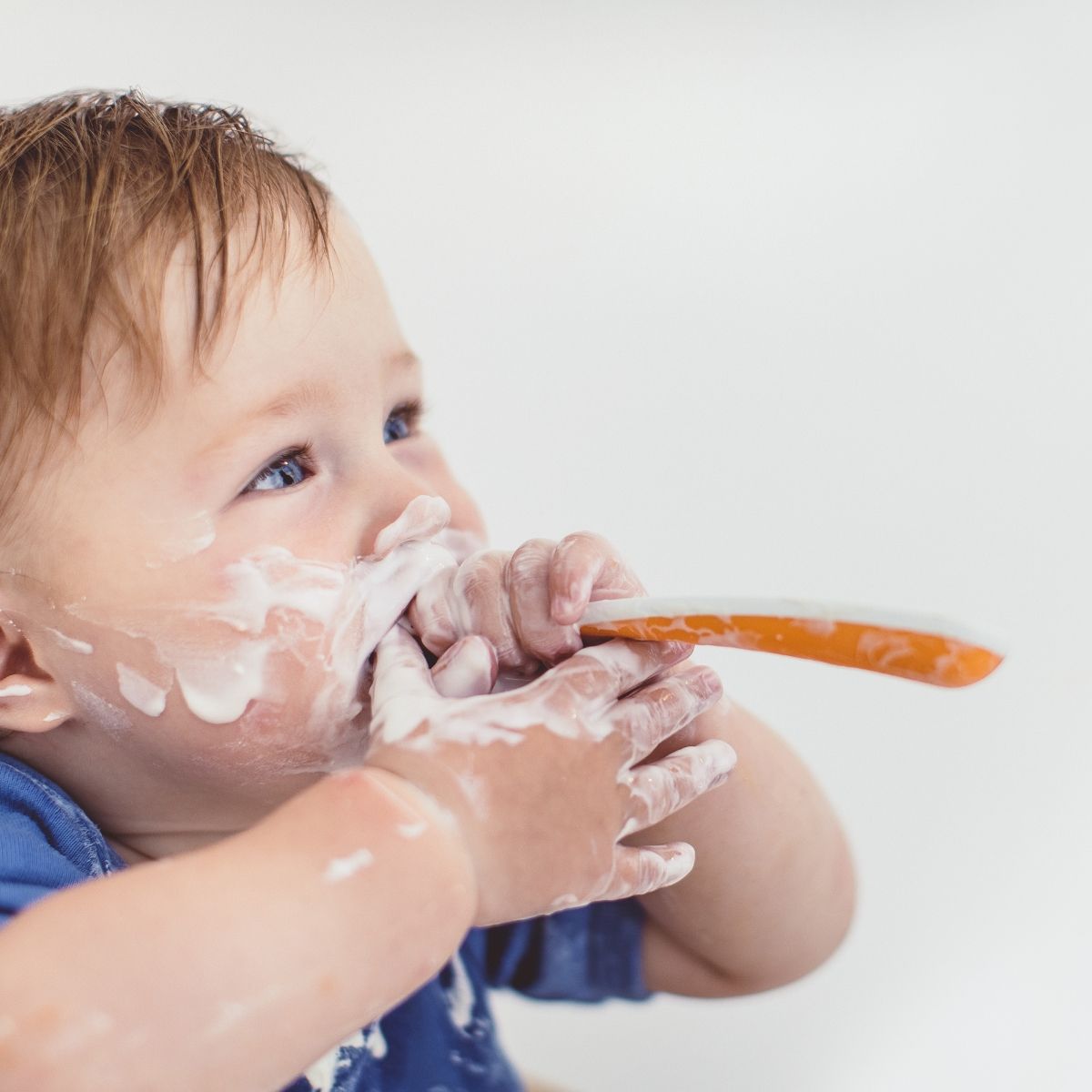
Allowing your baby to get messy during meals and play with their foods can be hard for parents to deal with but there are ways to make it more comfortable and with ease. Allow time for meals and exploring food, purchase an easy to clean coverall that can be easily cleaned after the meal or a mess mat. Clean them up only at the end so they don’t get distressed by being wiped.
- Building eating skills
There are lots of skills involved in learning to eat. Oral motor skills and hand to eye co-ordination. Babies learn through watching others, so having this time during weaning gives them time to practice and become independent eaters.
4 Practical tips for parents
- Make feeding fun by letting them explore and get messy with food….BUT also think and use these other tips.
- Focus on the key nutrients; iron, zinc, fat and vitamins such as A, C, D. There are other nutrients they need as well but these ones are important to know about.
- Encouraging variety and responsive feeding. Once they have had their first tastes of vegetables you can add more of the other food groups and combine foods. Introduce as much variety as you can as this is the perfect time to get them familiar with new foods.
- Eat as a family when you can so they can learn eating skills by watching others.
Conclusion
Food before one is just for fun can be a confusing phrase, but it also oversimplifies the real purpose of introducing solids. It is a myth as It doesn’t include the message about the importance of babies nutritional needs, introducing allergens, sensory exposure and building feeding skills that food brings.
There can still be fun in this weaning stage (before one) while offering nutritious foods as well.


0 Comments